A CCTV technician course provides theoretical and practical training in installing, maintaining, and troubleshooting surveillance systems, particularly closed-circuit television systems for residential, commercial, and industrial structures. The course provides installation skills like cable laying, equipment mounting, camera placement, etc. It also equips the participants with essential knowledge for diagnosing issues and troubleshooting them. Designed for anyone interested in surveillance technology, the CCTV camera technician course provides soft skills to interact with customers, proper documentation, and safety compliance.
Enroll in CCTV technician training courses from MEP Qatar to build a career in surveillance.
Globally, the demand for digital security is high. A CCTV installation course provides expertise in this rapidly growing surveillance industry. As the CCTV mechanic course opens doors for several career opportunities, professionals can learn this course to advance their careers and increase their earnings.
With certified training, you will be able to install and maintain the system with lots of perfection and accuracy. This will decrease errors at the time of installation. This proves your professional credibility. You can upgrade your skills and become future-ready with the CCTV engineer training course.
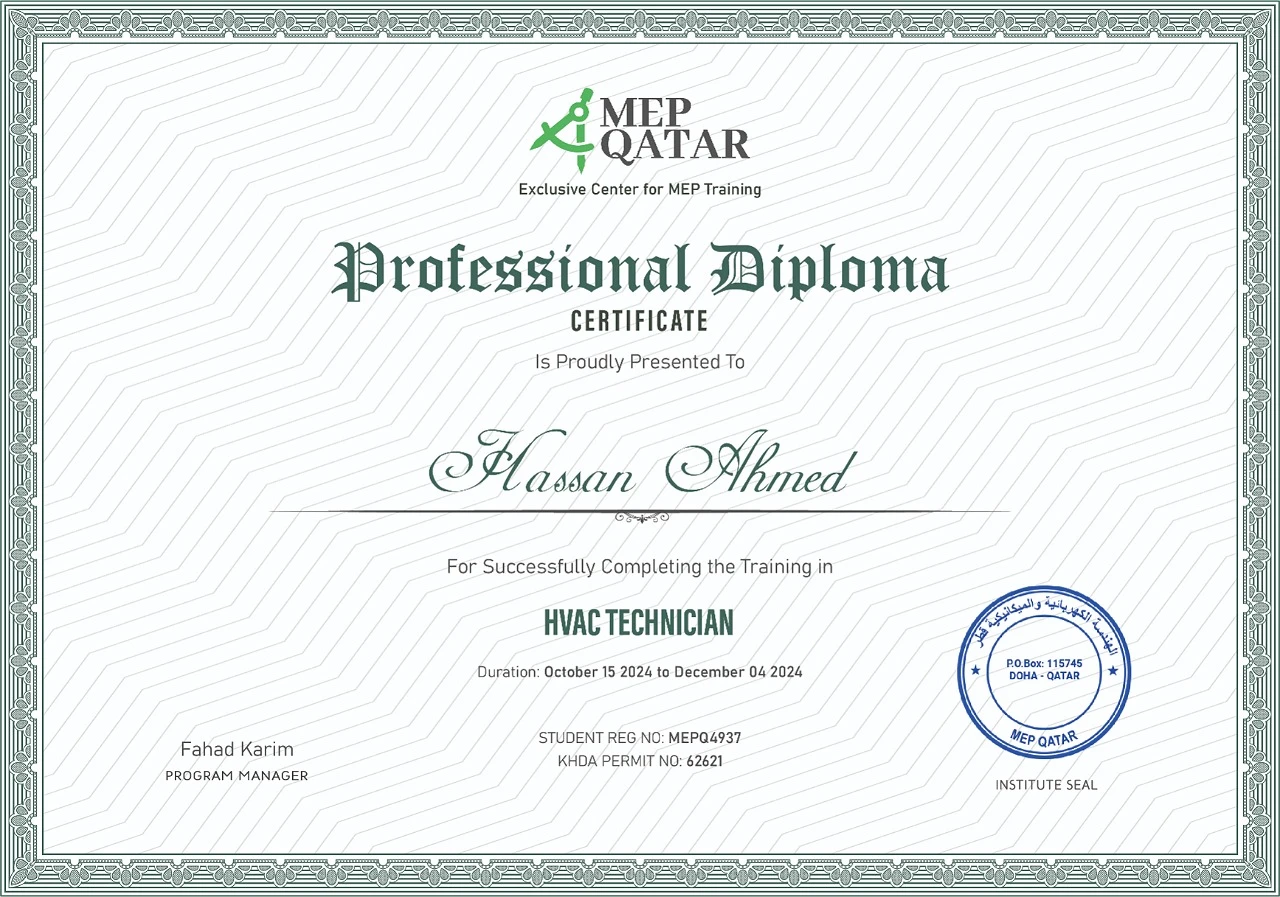
Soft skills are essential for every profession today. The course not only provides technical skills but also soft skills like communication and problem-solving. The CCTV technician certificate is proof of the skills gained. This will boost your career opportunities. So, learning this course is important for all professional technicians because of technical proficiency, soft skill development, career growth, and increased earning potential.
Why Learn the CCTV Camera Technician Training Course?
Get an in-depth knowledge of types of cameras, their installation, and troubleshooting. The industry is rapidly growing. So, you should ensure you stay updated if you want to get a competitive edge. Learn safety practices, cabling, and networking, and enjoy many job opportunities.
The industry demand for certified CCTV technicians is high and is also growing, especially in Doha. The demand is high because of
The syllabus includes the following:
The training outcome of the CCTV mechanic course includes the following: Key skills gained
You will gain practical skills in the installation, maintenance, and troubleshooting of CCTV.
Acquire a strong understanding of the different types of surveillance systems
Attain knowledge of safety standards
Software proficiency
Become proficient in software skills in video playback, camera settings, video backup, networking, software handling for IP cameras, configuration of DVR/NVR systems, and storage management.
Career advancements
You are assured of improved employability, increased salary potential, and opportunities for diverse roles. You can become an entrepreneur by starting your own security business, or you can also become a trainer.
You can pursue a wide range of roles after completing CCTV installation training. The roles include:
The industries employing CCTV technicians include MEP companies, malls, health centres, airports, security firms, and educational institutions.
MEP Qatar is a famous institute providing short-term technical courses for professionals to upgrade their knowledge. It should choose it for a CCTV technician course because of its:
Many training options are available in MEP Qatar.
The requirements of a CCTV operator include theoretical and practical knowledge in computer systems, communication skills, patience to monitor live footage, the ability to identify suspicious activity, observation skills, troubleshooting capability, and awareness of local regulations and standards.
The role of a professional CCTV mechanic is to install, maintain, and troubleshoot CCTV systems, maintain proper records, ensure image quality, follow safety standards, and support system upgrades
Yes, the course provides practical training in CCTV and a globally recognised certificate.
The duration varies depending on the syllabus, the institute, and the intensity of the course. However, it may typically range from 1 to 3 months.
The topics covered in the course include types of CCTV cameras, camera installation, system maintenance, fault detection, troubleshooting, networking, cabling, and career guidance.
Our New Batch Starts On Every Week In a Month